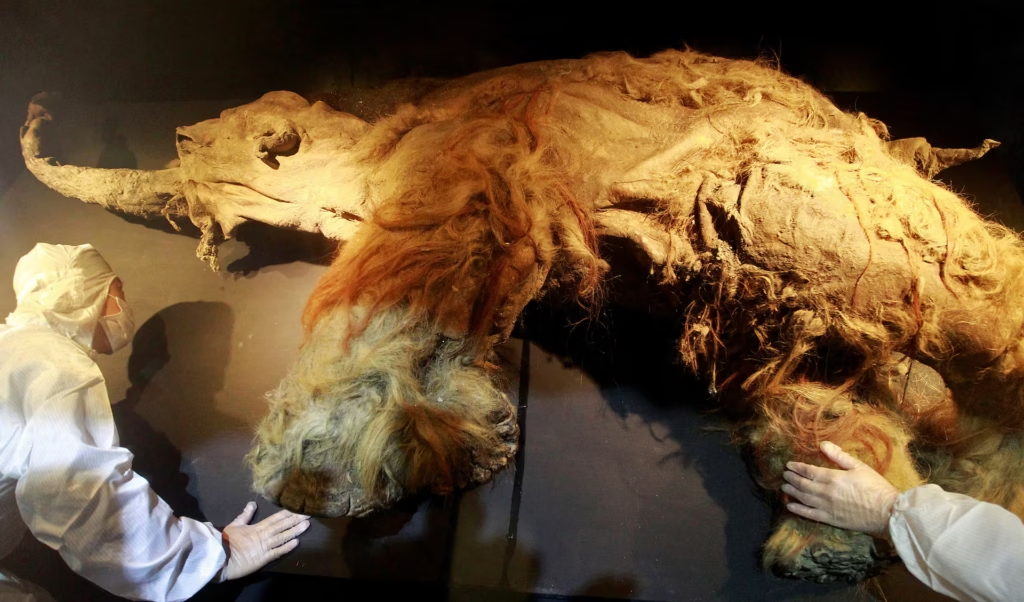
RNA recovered from Siberian mammoth that died 39,000 years ago
🧬 The Big Idea: De-Extinction of the Woolly Mammoth
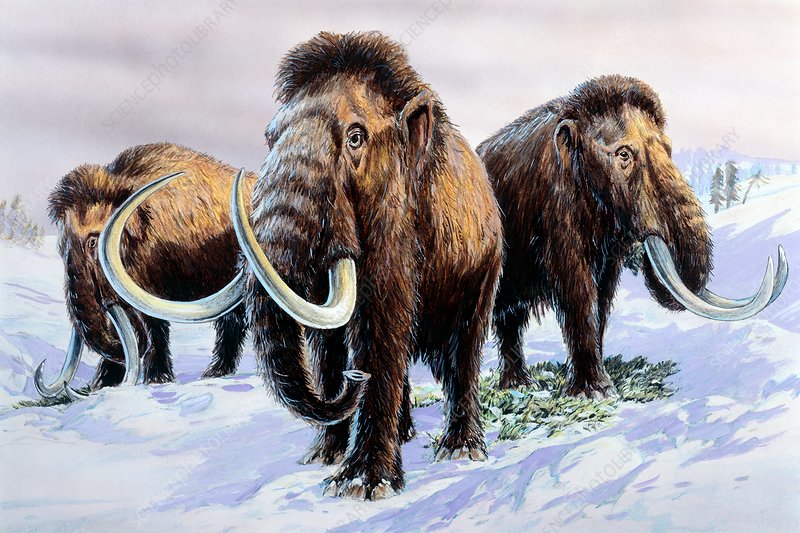
The notion of resurrecting the extinct Woolly Mammoth — once roaming the tundra of North America, Europe, and Asia during the Ice Age — may sound like science fiction. But thanks to advances in gene editing and paleogenomics, this idea is now under serious scientific scrutiny. The U.S. biotechnology startup Colossal Biosciences is leading the charge. Their goal: use preserved mammoth DNA, combined with the genome of the Asian Elephant (the mammoth’s closest living relative), to produce a cold-adapted mammoth-like creature.
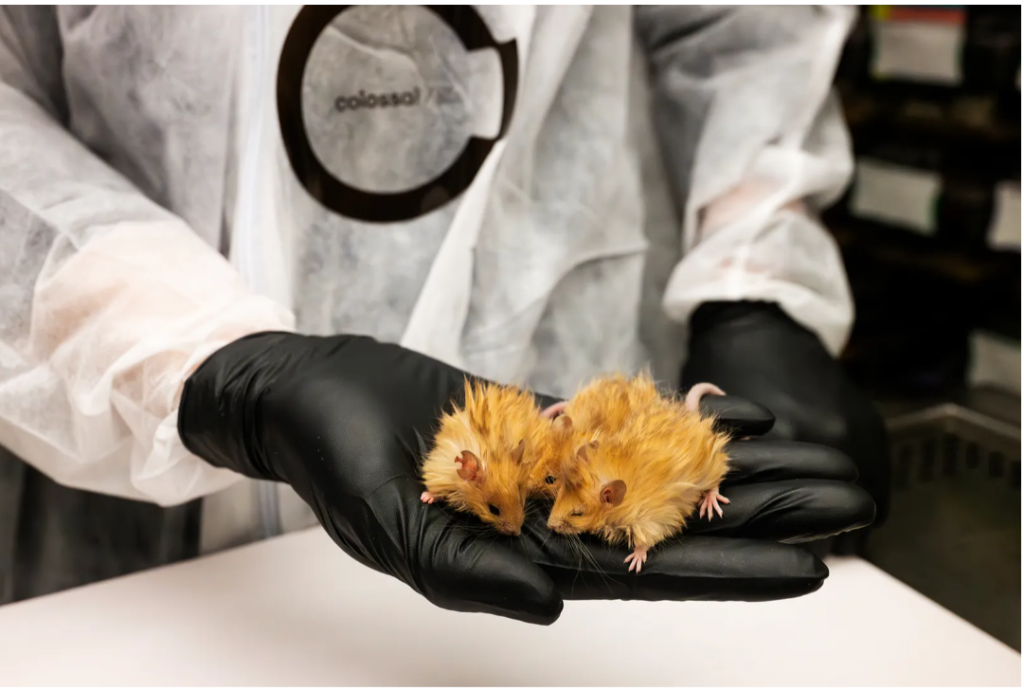
In early 2025, Colossal announced a milestone — the creation of the “Colossal Woolly Mouse,” a genetically modified mouse engineered to show mammoth-like hair and metabolic traits.
✅ What Has Actually Been Achieved (2025 Update)
– Woolly Mice: Proof-of-Concept
- Colossal scientists edited seven genes in lab mice to produce long, dense, woolly fur and modified fat metabolism — traits thought to help the mammoth survive icy climates.
- According to the company, these mice were born healthy in October 2024, marking the first living mammals to express mammoth-like traits.
- The work builds on a large comparative genomics study: researchers reviewed data from over 121 mammoth and elephant genomes to pinpoint key evolutionary differences.
– Funding & Timeline
- Colossal has raised substantial funding — reportedly reaching US $435 million — giving them resources to push forward.
- The company has stated ambitions to have an elephant embryo — engineered for mammoth traits — ready by 2026, and a calf (mammoth-like) born by 2028, likely using a surrogate elephant mother.
⚠️ Why It’s Not That Simple: Challenges & Criticism
Even with these breakthroughs, many scientists urge caution. Some of the main issues:
- Editing a handful of genes (like in mice) is fundamentally different from reconstructing the full genome and physiology of a mammoth. As one expert put it: “You might be able to alter the hair pattern of an Asian elephant or adapt it to the cold, but it’s not bringing back a woolly mammoth.”
- Differences between mice and elephants are vast; success in mice doesn’t guarantee success in much larger mammals.
- There are ethical and ecological concerns: reintroducing a “mammoth-like” animal into modern ecosystems — radically changed since the Ice Age — may have unforeseeable consequences.
- Survival in cold climate is only one feature. For a mammoth-like elephant to thrive, it would need appropriate habitat, food sources, social structure, and ecological niche — all currently absent.
🌍 Why Scientists Are Doing It: Potential Benefits
Despite the challenges, proponents argue the project could offer several benefits:
- Ecosystem restoration: Mammoth-like creatures could — in theory — help restore lost tundra-steppe ecosystems. Their grazing, trampling, and grazing patterns might help stabilize permafrost and influence vegetation dynamics.
- New conservation tools: The gene-editing and reproductive technologies developed for de-extinction could be repurposed to help conserve endangered species today.
- Scientific discovery: Reconstructing extinct species would deepen our understanding of evolution, adaptation, and resilience in mammals faced with extreme climates.
🔎 What’s Next: What to Watch For
- Will Colossal succeed in editing elephant cells, creating viable embryos, and carrying out a safe elephant pregnancy? So far — only mice.
- Will independent peer-reviewed studies confirm the health, viability, and cold-tolerance of genetically engineered animals?
- Will ecological, ethical, and regulatory hurdles (animal welfare, habitat readiness, environmental impact) be addressed — or will they prevent “mammoth revivals”?
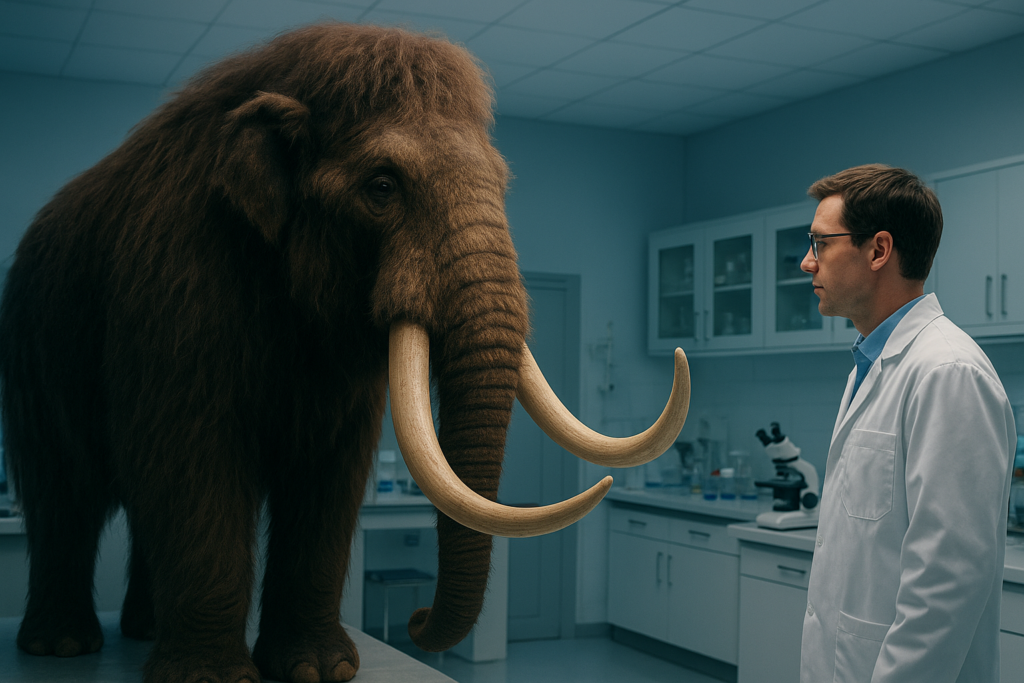
- How will public, scientific, and conservation communities respond if/when a “mammoth-like” calf is born?
📌 Final Thoughts
The dream of seeing woolly mammoths roam icy tundras again is inching closer — but what’s happening now is very far from true resurrection. The “woolly mice” are a promising proof-of-concept, not a guarantee.
Still, the progress at Colossal Biosciences represents a significant milestone in biotechnology, with potential applications beyond just de-extinction. Whether these efforts lead to living elephants that look like mammoths — or to new conservation tools that help save endangered species — remains to be seen.
For now, the woolly mammoth remains a powerful symbol: of biodiversity lost, of scientific ambition, and of the ethical questions that come with reshaping life itself.